The Paradigm of Intentional Culinary Evolution
In professional kitchens and advanced home culinary practice, a revolutionary approach is emerging that transcends traditional leftover management. Temporal Gastronomy—the art and science of designing meals with their future transformations intentionally embedded—represents the next frontier in culinary intelligence. This methodology doesn’t merely address what to do with leftovers; it reimagines cooking as a temporal architecture where each meal contains the DNA of its future incarnations.
Consider this: What if your Sunday roast wasn’t just a Sunday meal, but the first movement in a four-part culinary symphony designed to unfold throughout your week? This is the promise of Temporal Gastronomy—an approach that professional chefs are calling “the most significant evolution in home cooking since meal prepping.”
The Temporal Architecture Framework
The Three Temporal Layers of Modern Cuisine
The Present Consumption
-
Immediate sensory experience
-
Optimal texture and temperature
-
Primary flavor presentation
The Imminent Transformation
-
24-48 hour evolution potential
-
Structural and textural changes anticipated
-
Flavor concentration and melding
The Distant Reincarnation
-
3-7 day transformation planning
-
Radical reimagining potential
-
Ingredient deconstruction and reconstruction
The Professional Temporal Matrix
TIME FRAME    | TEXTURAL EVOLUTION    | FLAVOR DEVELOPMENT     | TRANSFORMATION PATH
0-24 hours    | Minimal change        | Acidity brightens      | Simple reheating
24-72 hours   | Structure softens     | Flavors meld           | Component recombination
72+ hours     | Cellular breakdown    | Concentration          | Radical reinvention
The Component Isolation Technique
Strategic Ingredient Separation
Professional temporal gastronomy begins not with cooking, but with strategic isolation. Rather than combining everything in one dish, components are cooked separately and stored independently:
Example: The Temporal Roast Chicken Dinner
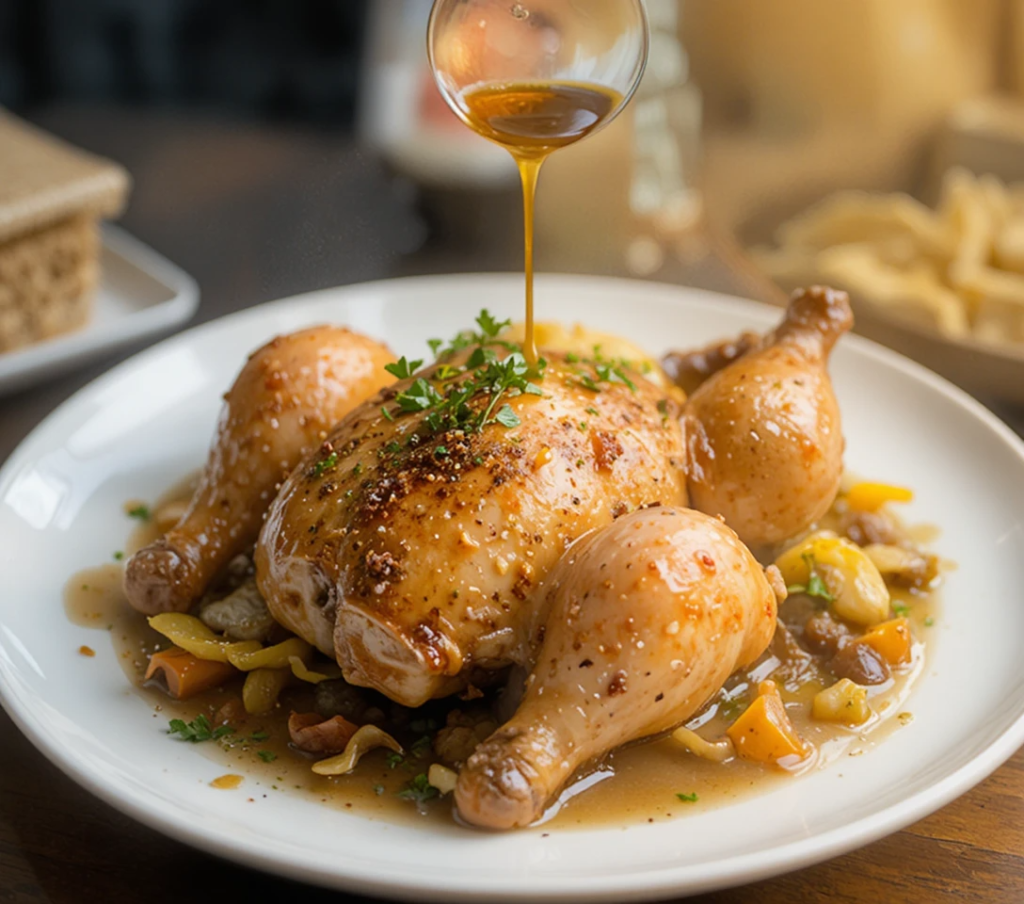
Traditional Approach: Roast chicken with vegetables and gravy served together, then stored together.
Temporal Approach:
-
Component A: Plain roasted chicken (versatile protein base)
-
Component B: Roasted vegetables without seasoning (neutral canvas)
-
Component C: Reduced stock (concentrated flavor vehicle)
-
Component D: Separate herb oil (freshness preservation)
-
Component E: Crispy chicken skin (textural element)
Result: Five independent transformation-ready components instead of one combined leftover.
The Isolation Principle:
“Cook together, store apart, transform individually, recombine creatively.”
The Flavor Trajectory Mapping
Predictive Flavor Development
Advanced cooks don’t just consider what flavors work now; they map how flavors will evolve:
The Flavor Trajectory Algorithm:
-
Identify dominant flavor notes in fresh preparation
-
Predict flavor migration over 72 hours
-
Map complementary trajectories for transformation
-
Create transformation bridges between flavor states
Case Study: Tomato-Based Sauce
-
Fresh (Day 0): Bright acidity, fresh herb prominence
-
Evolving (Day 1-2): Acidity mellows, sweetness emerges
-
Transformed (Day 3+): Umami depth, concentrated richness
-
Transformation Bridge: Add cream for tomato bisque, or chili for arrabbiata
Texture Time-Travel Engineering
The Professional Texture Timeline
Understanding how textures evolve enables intentional manipulation:
Protein Texture Evolution:
-
Poultry: Tender → Firm → Shreddable → Flakeable
-
Red Meat: Juicy → Chewy → Pull-apart → Minced texture
-
Fish: Flaky → Firm → Crumbled → Infused
Starch Texture Progression:
-
Rice: Separate → Clumped → Dry → Crystalline
-
Potatoes: Creamy → Firm → Grainy → Crispable
-
Bread: Soft → Stale → Dry → Crisp
Texture Intentionality:
Cook not for the texture you want now, but for the texture you’ll need tomorrow.
The Temporal Menu Design System
Professional Weekly Architecture
The 7-Day Self-Transforming Menu:
Foundation Creation
-
Purpose: Create versatile base components
-
Example: Roast chicken, unseasoned vegetables, plain grains
First Evolution
-
Purpose: Simple recombination
-
Example: Chicken sandwiches, vegetable grain bowl
Flavor Migration
-
Purpose: Cultural or regional transformation
-
Example: Chicken curry, fried rice with vegetables
Textural Reinvention
-
Purpose: Radical texture change
-
Example: Chicken croquettes, vegetable fritters
Reduction and Concentration
-
Purpose: Flavor intensification
-
Example: Chicken stock reduction, vegetable puree
Creative Synthesis
-
Purpose: Component fusion
-
Example: Chicken-vegetable pot pie
Culinary Archaeology
-
Purpose: Creative use of remnants
-
Example: “Everything” soup or frittata
Professional Equipment for Temporal Cooking
The Temporal Kitchen Toolkit
Essential Temporal Equipment:
-
Vacuum Chamber Sealer: For flavor-preserved component storage
-
Sous Vide Precision Cooker: For texture-controlled reheating
-
Dehydrator: For intentional texture modification
-
Immersion Circulator: For flavor infusion over time
-
Cryo-Freezing Capacity: For arresting evolution at optimal points
Storage Intelligence Systems:
-
Color-coded containers by temporal stage
-
Digital tracking with transformation reminders
-
Temperature-controlled zones for different evolution rates
The Science of Intentional Aging
Controlled Flavor Development
Professional techniques for guiding flavor evolution:
The Oxidation Acceleration Method:
-
Purposeful exposure to oxygen for flavor development
-
Controlled for wines, sauces, certain meats
-
Professional application: Quick-aged steak transformations
The Enzymatic Guidance System:
-
Using natural enzymes to direct breakdown
-
Papaya for tenderization, pineapple for sweetness development
-
Professional application: Overnight marinade transformations
The Microbial Management Approach:
-
Intentional fermentation guidance
-
Lactic acid development for sourdough or vegetable ferments
-
Professional application: Day 2-3 sauce transformations
The Temporal Flavor Library
Building a Transformation Database
Advanced practitioners maintain a Temporal Flavor Library documenting:
Ingredient-Specific Evolution Notes:
-
How each ingredient changes over 1, 3, 7 days
-
Optimal transformation windows
-
Failed transformation learnings
Successful Transformation Pathways:
-
Documented chains of successful evolutions
-
Cross-reference by ingredient, cuisine, technique
-
Personal transformation “greatest hits”
Professional Implementation Protocol
The Temporal Kitchen Workflow
Temporal Planning Session
-
Weekly meal design with transformation mapping
-
Ingredient purchase aligned with temporal needs
-
Equipment preparation for planned transformations
Cooking
-
Component isolation cooking
-
Proper storage protocol implementation
-
Documentation of starting points
Daily Transformation Execution
-
Morning assessment of temporal state
-
Transformation decision based on optimal window
-
Evening documentation of results
Weekly Analysis and Optimization
-
Success/failure analysis
-
Library updates
-
System refinement
The Economic Mathematics of Temporal Cooking
The Professional ROI Calculation
Traditional Cooking Economics:
-
Cost per meal × Number of meals = Total food cost
-
Waste factor (typically 25-40%) added
Temporal Cooking Economics:
-
Base component cost ÷ Number of temporal transformations = Cost per transformation
-
Waste factor reduced to 5-10%
Example Calculation:
-
$30 roast chicken → 7 temporal transformations = $4.29 per meal
-
Compared to traditional: $30 ÷ 2 meals = $15 per meal
-
Savings: 71% reduction in cost per meal
The Environmental Chronology Impact
Temporal Sustainability Metrics
Waste Reduction Timeline:
-
Week 1: 40-50% reduction in food waste
-
Month 1: 60-70% reduction
-
Quarter 1: 75-85% reduction
-
Year 1: 90%+ reduction achievable
Resource Efficiency Gains:
-
Reduced cooking energy (multiple meals from one cooking session)
-
Decreased water usage (less food waste = less disposal processing)
-
Lower carbon footprint (reduced grocery transportation frequency)
The Psychological Benefits of Temporal Cooking
The Cognitive Rewards
Decision Fatigue Reduction:
-
Transformation pathways pre-mapped
-
Daily “what’s for dinner” stress eliminated
-
Creative satisfaction without daily creative burden
Culinary Skill Development:
-
Progressive skill building through the week
-
Lower-risk experimentation framework
-
Confidence building through successful chains
Mindful Cooking Practice:
-
Increased awareness of food’s journey
-
Deeper connection to ingredients
-
Appreciation for transformation as creative act
Advanced Temporal Techniques
Professional Methods for Home Implementation
The Flavor Bridge Technique:
Creating intentional flavor connections between temporal stages
The Texture Memory Method:
Using cooking techniques that “remember” their previous textures
The Aroma Continuity System:
Maintaining aromatic connections through transformation chains
Conclusion: The Future is Temporal
Temporal Gastronomy represents more than a cooking technique—it’s a fundamental reimagining of our relationship with food, time, and creativity. It acknowledges that food isn’t static, that time isn’t an enemy of freshness, and that transformation isn’t compromise but rather evolution.
The professional kitchen of the future won’t have a “leftovers” section—it will have a temporal transformation lab. The home cook of tomorrow won’t see yesterday’s meal as a problem—they’ll see it as Phase 2 of a delicious evolution.
Your Temporal Gastronomy Initiation:
Start Small:
-
This week, cook one meal with one intentional transformation planned
-
Document the transformation process and results
-
Notice how your perspective shifts
Grow Gradually:
-
Next week, plan two connected meals
-
Begin your Temporal Flavor Library
-
Share your discoveries with one person
Master Systematically:
-
Within one month, implement a full temporal week
-
Calculate your savings and waste reduction
-
Teach someone else the basics
Remember: In Temporal Gastronomy, there are no leftovers—only ingredients at different points in their delicious evolution. Every meal is both an ending and a beginning, a consumption and a potential, a moment in time and a bridge to the next culinary experience.