If you’re like most Americans, your refrigerator contains about $1,500 worth of food that will never get eaten. That’s not an exaggeration—it’s USDA data. But here’s the secret no one tells you: the problem isn’t that you’re buying too much food or cooking too much. The problem is you haven’t learned the simple system for turning yesterday’s dinner into today’s great meal.
This isn’t about gourmet cooking or complicated recipes. This is about practical strategies that real people with real jobs and real families can use tonight. No fancy ingredients, no special equipment, just smart thinking that saves you money and time.
The Psychology of Leftovers (And Why You Hate Them)
Let’s start with why leftovers feel like punishment. Psychologically, we associate leftovers with:
-
Lack of freshness
-
Reduced quality
-
Boredom (eating the same thing)
-
Feeling cheap or poor
But what if we reframed this? Professional chefs don’t see leftovers. They see pre-prepped ingredients. That roast chicken isn’t “last night’s dinner getting old”—it’s cooked protein ready for transformation. Those vegetables aren’t “sides past their prime”—they’re flavor bases for new dishes.
The mindset shift happens here: Stop saying “leftovers.” Start saying “meal starters.” This simple language change makes all the difference.
The 3-Day Rule (What Actually Works)
Food safety matters, but let’s be practical. Here’s what you really need to know:
Day 1-2: Perfect for simple reheating
Day 3: Needs transformation
Day 4: Freeze it or use it in cooked dishes
Day 5+: Compost or discard
The magic window is days 2-4. This is when flavors have melded but food is still perfectly safe. Most dishes actually taste better on day 2 or 3 because:
-
Herbs and spices have fully infused
-
Proteins have tenderized further
-
Flavors have married and deepened
The 5 Basic Transformations (Master These)
Transformation : The Soup Method
Works with: Almost anything
Time: 15 minutes
How-to:
-
Take leftover protein and vegetables
-
Add broth (canned is fine)
-
Season with salt, pepper, maybe herbs
-
Simmer 10 minutes
-
Optional: Blend for cream soup
Example: Last night’s roasted chicken + carrots + onion + broth = chicken vegetable soup
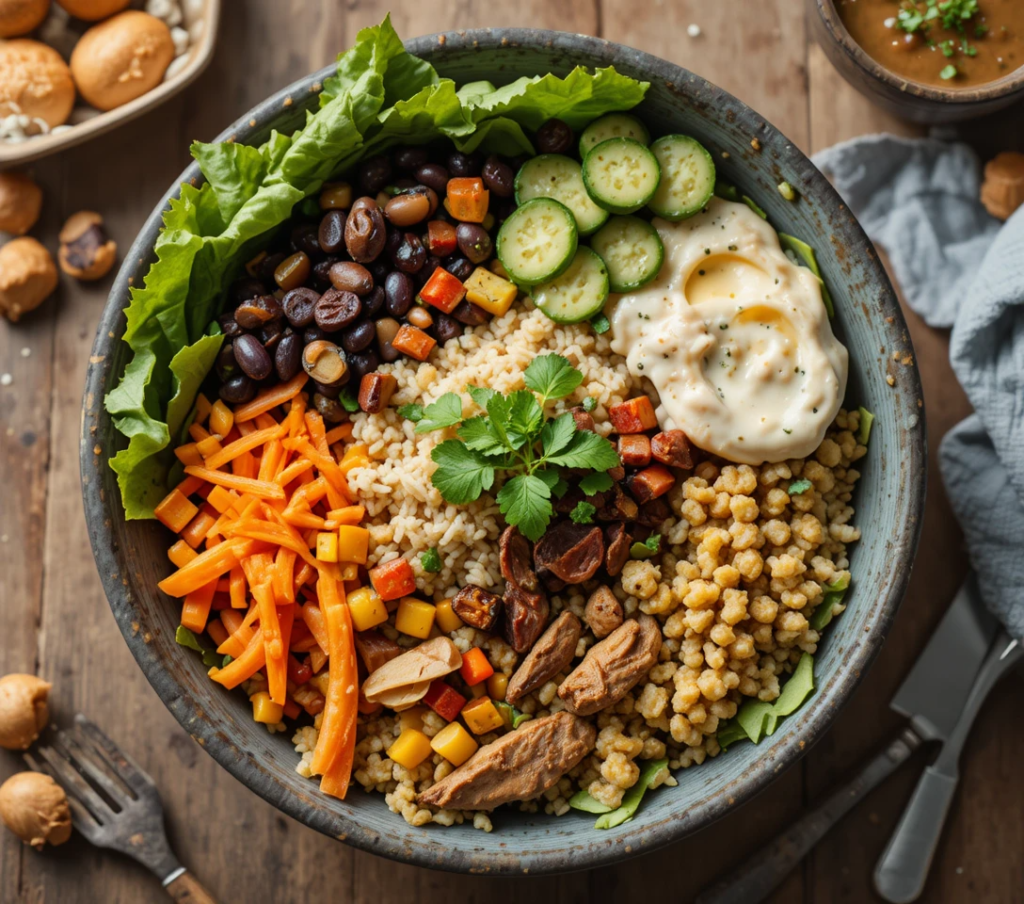
Transformation : The Bowl Formula
Works with: Grains + protein + vegetables
Time: 10 minutes
Formula: Grain + Protein + Vegetable + Sauce + Crunch
Build your bowl:
-
Base (rice, quinoa, lettuce)
-
Protein (leftover meat, beans, tofu)
-
Vegetables (cooked or fresh)
-
Sauce (dressing, salsa, yogurt)
-
Crunch (nuts, seeds, crispy onions)
Transformation : The Wrap/Roll Up
Works with: Any fillable situation
Time: 5 minutes
Options:
-
Tortillas for burritos
-
Lettuce for lettuce wraps
-
Bread for sandwiches
-
Crepes or pancakes
Pro tip: Changing the vessel changes the entire experience.
Transformation : The Hash/Skillet
Works with: Potatoes + protein combinations
Time: 15 minutes
Method:
-
Dice potatoes (or use leftover)
-
Cook in oil until crispy
-
Add chopped protein and vegetables
-
Season well
-
Optional: Make wells for eggs
Transformation : The Casserole/Bake
Works with: Multiple leftovers combined
Time: 30 minutes (mostly hands-off)
Assembly:
-
Mix leftovers in baking dish
-
Add binding (eggs, sauce, cheese)
-
Top with breadcrumbs or more cheese
-
Bake at 375°F until bubbly
The Weekly System That Actually Works
Sunday: Big cook (roast, stew, casserole)
Monday: Straight leftovers (everyone’s tired anyway)
Tuesday: Transform (soup, bowls, or wraps)
Wednesday: New cook (something different)
Thursday: Transform Wednesday’s meal
Friday: Clean-out meal (use everything left)
Saturday: Flexible (takeout or experiment)
This system ensures:
-
No food sits more than 4 days
-
Variety throughout the week
-
Only 3 real cooking days
-
Minimal food waste
Money You’ll Actually Save
Let’s break down real numbers for an average family of four:
Weekly savings:
-
Grocery reduction: $35 (buying less because you’re using more)
-
Takeout reduction: $25 (less “I don’t want to cook” nights)
-
Time savings: 4 hours (valued at $15/hour = $60)
-
Total weekly value: $120
Monthly impact:
-
Direct cash savings: $240
-
Time savings: 16 hours
-
Waste reduction: 30-40 pounds of food
Annual totals:
-
Cash: $2,880
-
Time: 208 hours (that’s 5 work weeks!)
-
Environmental: 500+ pounds less waste
Freezer = Your Secret Weapon
Most people underuse their freezer. Here’s how to fix that:
What freezes beautifully:
-
Soups and stews (ladle into containers)
-
Cooked meats (portion in bags)
-
Sauces (ice cube trays for small portions)
-
Bread and baked goods
-
Cooked rice and grains
Freezer organization:
-
Label everything (contents + date)
-
Use within 3 months for best quality
-
Freeze in meal-sized portions
-
Keep inventory list on freezer door
Pro move: When you make something freezable (soup, chili, sauce), double it. Eat half now, freeze half for future you.
Kid-Friendly Transformations (That Actually Work)
If you have picky eaters, try these:
The “Magic” Quesadilla:
Leftover anything + cheese between tortillas = kid-approved
Pizza 2.0:
English muffins + tomato sauce + leftovers + cheese = personalized pizzas
“Special” Fried Rice:
Let kids choose mix-ins from leftover options
Build-Your-Own-Bowl Bar:
Set out leftovers as options, let kids create
The secret with kids: Don’t call it leftovers. Call it “choose your adventure dinner” or “create your own masterpiece.”
Common Problems Solved
Problem: “It’s dry”
Solution: Add moisture. Sauce, dressing, gravy, or even a fried egg on top.
Problem: “It’s boring”
Solution: Add one fresh element. Herbs, citrus, something crunchy, or a new sauce.
Problem: “Not enough for everyone”
Solution: Stretch it. Add rice, beans, pasta, or bread to make it enough.
Problem: “No one wants it”
Solution: Transform it so completely they don’t recognize it. Chicken becomes tacos. Potatoes become pancakes. Vegetables become soup.
Safety Without Stress
The sniff test works: If it smells off, toss it.
Visual check: Mold, strange colors, or slimy texture = toss.
Temperature matters: Keep fridge below 40°F.
When in doubt: Throw it out. $3 of questionable food isn’t worth getting sick over.
Smart storage:
-
Cool quickly (divide large portions)
-
Store in shallow containers
-
Use clear containers (so you see what’s there)
-
Label with dates
The Environmental Impact (Real Numbers)
Food waste isn’t just about money. When we waste food:
-
We waste all the water used to grow it (1,400 gallons per pound of beef)
-
We waste the energy for production and transport
-
We contribute to landfill methane (food waste produces methane, a potent greenhouse gas)
-
We disrespect the labor of everyone in the food chain
By using leftovers, each American household can:
-
Reduce their carbon footprint by 1-2 tons annually
-
Save thousands of gallons of water
-
Decrease methane production significantly
Getting Started Tonight
The 10-minute challenge:
-
Set a timer for 10 minutes
-
Open your refrigerator
-
Pull out 2-3 oldest leftovers
-
Ask: “Can I transform these in 10 minutes?”
-
If yes: Pick a transformation method and do it
-
If no: Compost or freeze
Start small: Don’t try to overhaul everything at once. Pick one meal this week to transform. Next week, pick two. Build the habit gradually.
The Bigger Picture
This isn’t just about leftovers. It’s about:
-
Financial intelligence: Making your food budget work harder
-
Time management: Getting hours back in your week
-
Environmental responsibility: Doing your part with practical action
-
Culinary creativity: Learning to cook with what you have
-
Family values: Teaching kids about resourcefulness
Conclusion: Your Refrigerator Is Full of Potential
Right now, in your kitchen, you have everything you need to save thousands of dollars annually, reclaim hundreds of hours, and reduce your environmental impact significantly. The tools aren’t fancy recipes or expensive ingredients. They’re the containers already in your refrigerator and the simple techniques outlined here.
Tonight, when you clean up after dinner, pause. Look at what remains not as a chore, but as opportunity. That chicken could be tomorrow’s soup. Those vegetables could be a frittata. That rice could be fried rice.
The first step is the simplest: Open the refrigerator. The second step: See potential instead of problems. The third step: Transform one thing.