The Forgotten Art of Culinary Archaeology
Every kitchen has its ghosts. Not the haunted kind, but the edible ones. They live in the half-inch of mustard at the bottom of the jar, the quarter-cup of cooked lentils behind the milk, the three spears of asparagus lying in the crisper drawer like forgotten soldiers. We buy new ingredients to make new meals, while these culinary ghosts whisper from the back of the refrigerator, slowly fading into science experiments.
This isn’t just about waste. It’s about missing the first rule of creative cooking: constraint breeds genius. The most memorable meals in human history weren’t created from fully stocked pantries, but from necessity—from what was left, what was about to turn, what couldn’t be wasted.
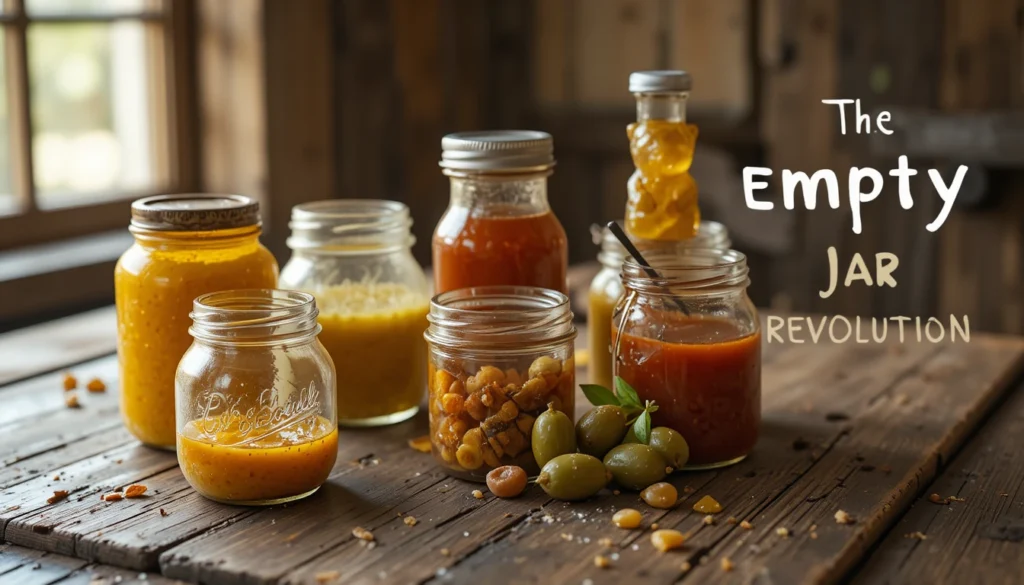
The Empty Jar Revolution begins with a simple shift: instead of asking “What should I make?” you start by asking” What must I use?” This changes everything.
The Psychology of the Almost-Empty
Why We Avoid the Ends of Things
There’s a psychological term for this: unit bias. We prefer to use complete units. A new jar of pasta sauce feels like a “proper” ingredient. The last quarter of a jar feels like a problem. This bias costs the average household $1,800 annually in discarded food.
But consider this: those “ends” are where flavors concentrate. The last bit of:
- Jam has the most fruit intensity
- Mustard has absorbed the most vinegar bite
- Pickle brine has become a powerful flavor liquid
- Salad dressing contains the settled herbs and spices
The Three-Day Rule for Refrigerator Blindness
Research in food psychology shows we become “blind” to items in our refrigerator after just 72 hours. That leftover rice you intended to use? By day four, your brain categorizes it as “old” rather than “ingredient.” The Empty Jar Revolution fights this by making ends and leftovers the centerpiece, not the afterthought.
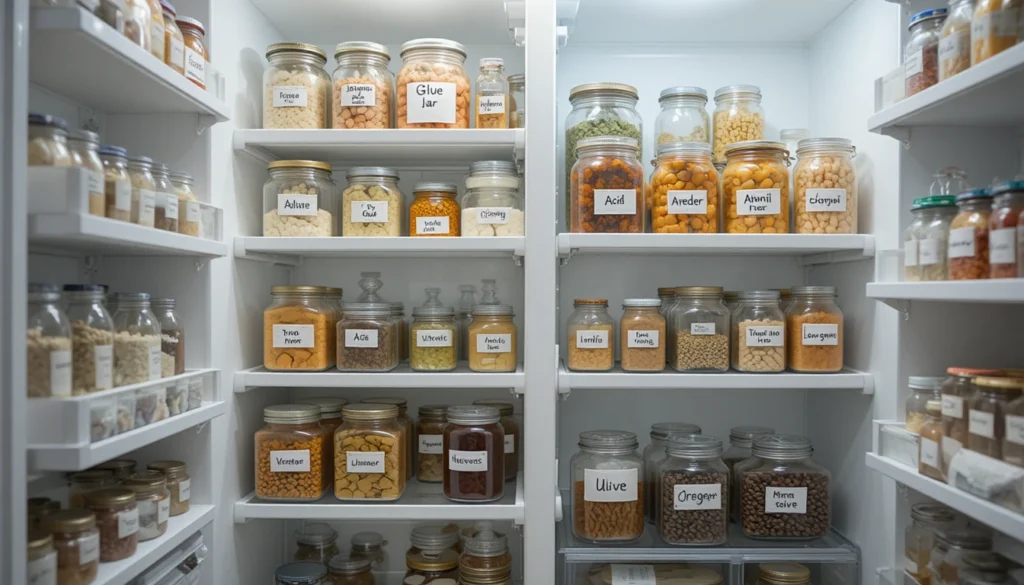
The Empty Jar Pantry—Your New Foundation
The Five Essential “Ends” Every Kitchen Needs
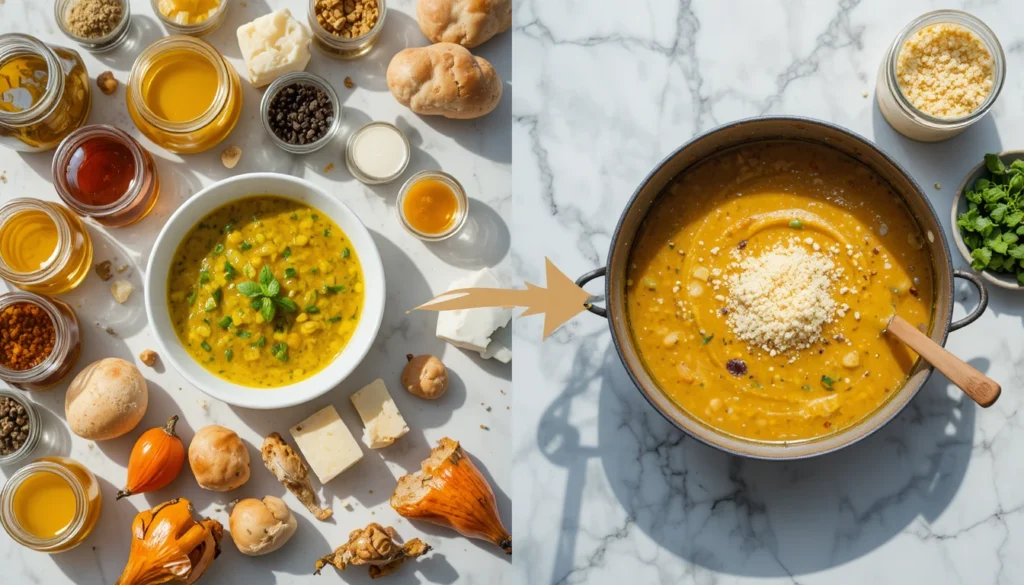
- The Glue Jar: That last bit of jam, honey, or maple syrup. Purpose: Natural sweet binder for dressings, marinades, and sauces.
- The Acid Library: Remnants of pickles, capers, olives in their brines. Purpose: Instant brightening for any dull dish.
- The Umami Reserve: The hardened Parmesan rind, dried mushroom bits, anchovy paste tube. Purpose: Deep flavor foundation for soups and stews.
- The Texture Bank: Stale cracker crumbs, half-bags of nuts, ends of bread. Purpose: Crucial crunch and body for transformed dishes.
- The Liquid Gold: Wine too old for drinking, beer gone flat, vegetable cooking water you didn’t pour down the drain. Purpose: Free flavor liquid for cooking grains or making soups.
How to Store Your Ends Properly
| End Type | Storage Method | Life Span | Transformation Idea |
|---|---|---|---|
| Sauce/Jar Ends | Scrape into small jar, label | 2 weeks | Salad dressing base |
| Cheese Rinds | Freeze in bag | 6 months | Simmer in soup |
| Bread Ends | Dry, process to crumbs, freeze | 3 months | Breading or thickener |
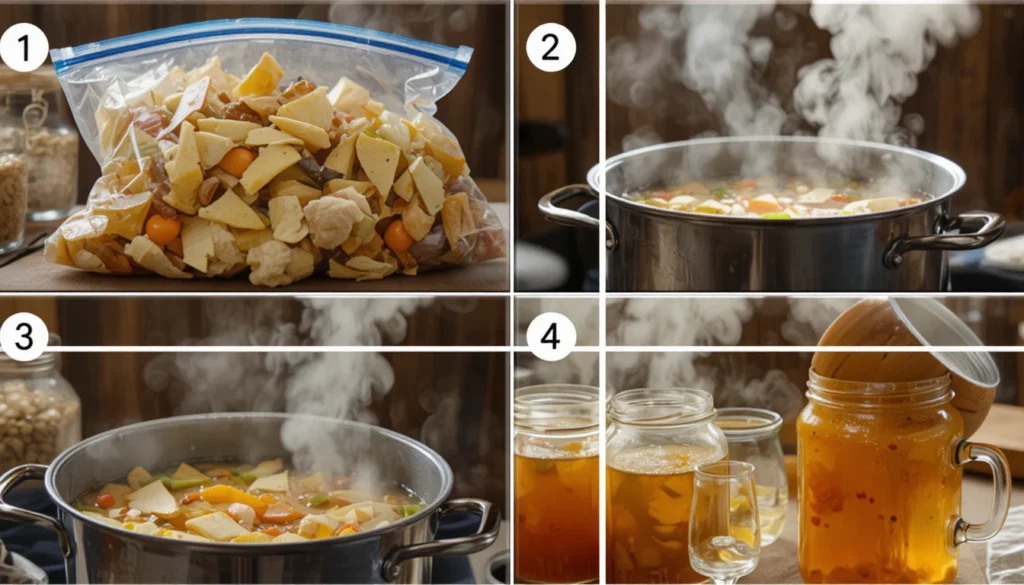
| Vegetable Trimmings | Freeze in bag until full | 3 months | Homemade stock |
| Herb Stems | Chop fine, mix with oil, freeze in ice cube tray | 4 months | Flavor bombs for cooking |
The Transformations—From End to Centerpiece
The Mustard Jar Vinaigrette (The 30-Second Miracle)
The Whisper” You paid for this whole jar, but you’ll throw down the most luscious part.”
The Revolution:
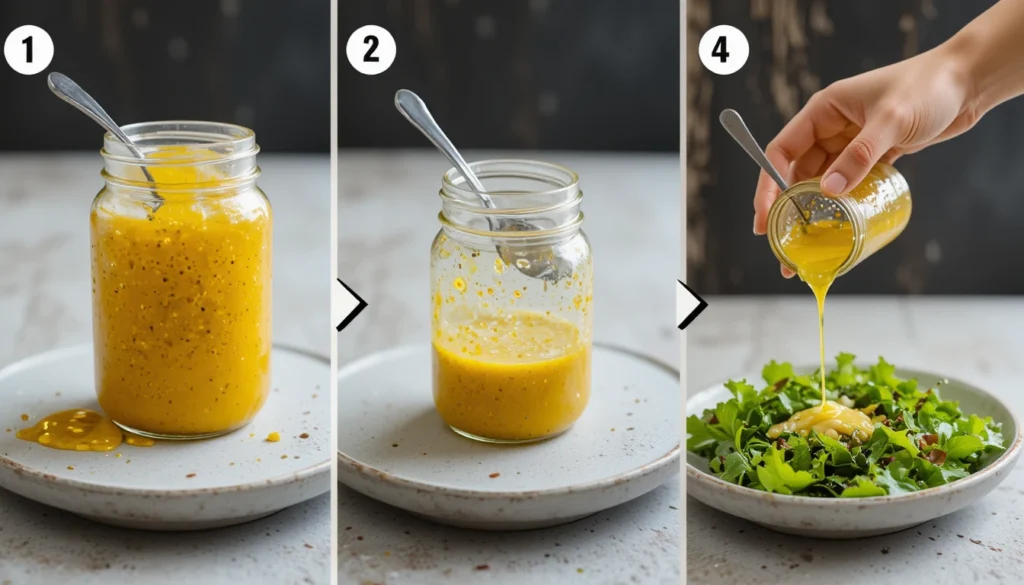
- Take almost-empty mustard jar (about 1-2 tablespoons left)
- Add ¼ cup vinegar (any kind)
- Add ½ cup oil (olive, avocado, or neutral)
- Add pinch of salt, pepper, dried herbs
- Shake violently for 20 seconds
- Result: The remaining mustard acts as both flavor and emulsifier. You get a perfectly creamy vinaigrette and a clean jar.
The Parmesan Rind Broth (The Free Umami Bomb)
The Whisper: “This hard rind is ‘trash’ that costs $25/pound.”
The Revolution:
- Collect Parmesan rinds in freezer bag
- When you have 3-4, add to pot with:
- Saved vegetable trimmings (onion skins, carrot tops, celery ends)
- 8 cups water
- 1 bay leaf
- 5 peppercorns
- Simmer 45 minutes, strain
- Result: Rich, savory broth worth $6 at a store, made from “waste”
Stale Bread “Poor Man’s Parm” (The $0 Crunch)
The Whisper” This chuck is too banal for sandwiches but perfect for commodity differently.”
The Revolution:
- Toast stale bread until completely dry
- Process in food processor to fine crumbs
- Mix with:
- Zest of 1 lemon
- 2 tablespoons dried herbs
- 1 teaspoon garlic powder
- Salt to taste
- Result: Flavorful breadcrumb topping that elevates pasta, salads, roasted vegetables
The Weekly Empty Jar Challenge
The Sunday Night Ritual
- The Tray Method: Empty refrigerator contents onto baking sheets (one for perishables, one for condiments/ends)
- The Sort: Create three piles:
- Use First (perishables that need attention)
- Foundation (ends and preserves for building meals)
- Fresh (new ingredients that can wait)
- The Plan: Build meals starting with Use First, supported by Foundation
Sample Empty Jar Meal Plan
| Day | Empty Jar Foundation | Transformation | Fresh Addition |
|---|---|---|---|
| Monday | Last ½ cup lentils, pickle brine | Lentil salad with brine vinaigrette | Fresh herbs, cherry tomatoes |
| Tuesday | Stale bread, Parmesan rind | Breadcrumb pasta with rind-enriched sauce | Zucchini, garlic |
| Wednesday | Jam ends, mustard dregs | Glaze for roasted chicken | Chicken thighs, potatoes |
| Thursday | Various vegetable trimmings | “Clean sweep” minestrone | Canned tomatoes, pasta |
| Friday | Assorted cheese nubs | Gourmet grilled cheese | Apple slices, arugula |
The Science of Flavor Concentration
Why Ends Taste Better
- Evaporation: Less liquid in almost-empty jars means more concentrated flavor
- Infusion Time: The last bits have been steeping in the original medium longest
- Surface Area: Small amounts coat more thoroughly when shaken or mixed
- Oxidation: Controlled exposure to air can develop complex flavors (as with vinegar-based condiments)
The Maillard Reaction of the Pantry
Just as browning creates new flavors in cooking, time creates new flavors in condiments. That last bit of ketchup isn’t just tomato and vinegar anymore—it’s developed deeper, almost fermented notes perfect for adding complexity to stews or marinades.
The Ripple Effect—Beyond Your Kitchen
The Environmental Mathematics
If every household in the U.S. used their ends intentionally:
- Food waste would decrease by 25% immediately
- Methane from landfills would decrease by 8 million tons annually
- Water waste would decrease by 6 trillion gallons annually (the amount used to grow discarded food)
The Mindset Shift
The Empty Jar Revolution changes more than your cooking. It changes:
- Grocery shopping: You buy less, more intentionally
- Meal planning: You plan from what you have, not what you want
- Creativity: Constraints force innovation
- Appreciation: You value food as a complete resource
Your First Empty Jar Meal—A Guided Experiment
Tonight’s Challenge: The “Bottom of the Jar” Bowl
- Gather: Every almost-empty condiment jar (minimum 3, maximum 6)
- Scrape: Into a bowl, combine contents of all jars
- Analyze: Taste. Is it predominantly:
- Sweet? (Add acid and salt)
- Sour? (Add oil and sweet)
- Savory? (Add fresh herbs and texture)
- Build: Use this custom sauce as base for grain bowl, marinade, or dressing
- Celebrate: You’ve just created a flavor combination that has never existed before and will never exist again
The Revolution Begins Tonight
Open your refrigerator. Not to see what’s full, but to see what’s almost gone. That quarter-cup of yogurt? That’s tomorrow’s marinade. Those three tablespoons of salsa? That’s the base for tonight’s soup. The hardened honey in the bear? That’s the sweet note in your next stir-fry.
The most creative cooking period in history wasn’t during times of abundance, but during times of scarcity. Our grandmothers didn’t have fully stocked pantries—they had ingenuity. They knew that necessity isn’t the mother of invention because we’re desperate, but because constraint forces us to see what abundance blinds us to.
Your kitchen isn’t poorly stocked. It’s rich with potential you’re overlooking. The Empty Jar Revolution doesn’t ask you to buy anything new. It asks you to see what you already have with new eyes.
Start with the almost-empty. You’ll be amazed how full your cooking becomes.