Introduction: The Art of Culinary Reinvention
In American households, approximately $1,500 worth of food gets wasted annually per family—not because it’s inedible, but because we lack the systems to transform it creatively. This guide isn’t about cooking new meals; it’s about mastering the art of food reinvention—taking what already exists in your refrigerator and pantry and giving it new life, new purpose, and new deliciousness.
Professional chefs have a secret: The most creative dishes often come not from new ingredients, but from intelligently transforming what’s already prepared. This system will teach you to see leftovers not as “yesterday’s dinner” but as “tomorrow’s ingredients.”
The Leftover Assessment Protocol
The 3-Minute Fridge Audit
Before transformation comes assessment. Every successful leftover makeover begins with understanding what you’re working with:
Categorize Your Leftovers
-
Proteins: Cooked meats, fish, tofu, beans
-
Grains: Rice, pasta, bread, potatoes
-
Vegetables: Cooked or raw, all types
-
Sauces/Liquids: Gravies, soups, dressings
-
Composite Dishes: Casseroles, stir-fries, mixed meals
Quality Evaluation
-
Visual Check: Color, moisture, separation
-
Smell Test: Fresh aroma (trust your nose)
-
Texture Assessment: Firmness, moisture level
-
Safety Verification: Within 3-4 day window
Transformation Potential Analysis
-
What textures are present?
-
What flavors are dominant?
-
What could this become?
-
What’s missing for ideal transformation?
The Temperature Transformation Techniques
Cold to Hot Transformations
The Reheating Revolution:
Not all reheating is created equal. Different foods require different approaches:
Oven Method (Best for: Crispy foods, baked dishes)
-
Temperature: 350°F
-
Time: 10-20 minutes
-
Pro Tip: Add moisture (water in pan below) to prevent drying
Skillet Method (Best for: Proteins, vegetables, rice)
-
Medium heat with oil/butter
-
Constant movement
-
Pro Tip: Add fresh aromatics (garlic, ginger) during reheating
Steam Method (Best for: Dumplings, moist dishes)
-
Basket over boiling water
-
Covered
-
Pro Tip: Wrap in parchment for individual portions
Air Fryer Method (Best for: Anything that should be crispy)
-
375°F for 5-10 minutes
-
Pro Tip: Spritz with oil for better results
Hot to Cold Transformations
Some foods actually improve when served cold:
Pasta Transformation:
-
Toss with vinaigrette for pasta salad
-
Add fresh vegetables and herbs
-
Serve as cold noodle dish
Protein Revival:
-
Slice thinly for cold sandwiches
-
Cube for salad topping
-
Shred for cold wraps
The Texture Modification System
The 4 Texture Transformations
1. Crisp to Soft Transformation
For: Stale bread, crackers, chips
Method: Moisture addition
Result: Bread pudding, strata, panzanella
2. Soft to Crisp Transformation
For: Soggy vegetables, limp proteins
Method: Dry heat application
Result: Roasted vegetables, crispy chicken skins
3. Whole to Broken Transformation
For: Large pieces, whole vegetables
Method: Chopping, shredding, mashing
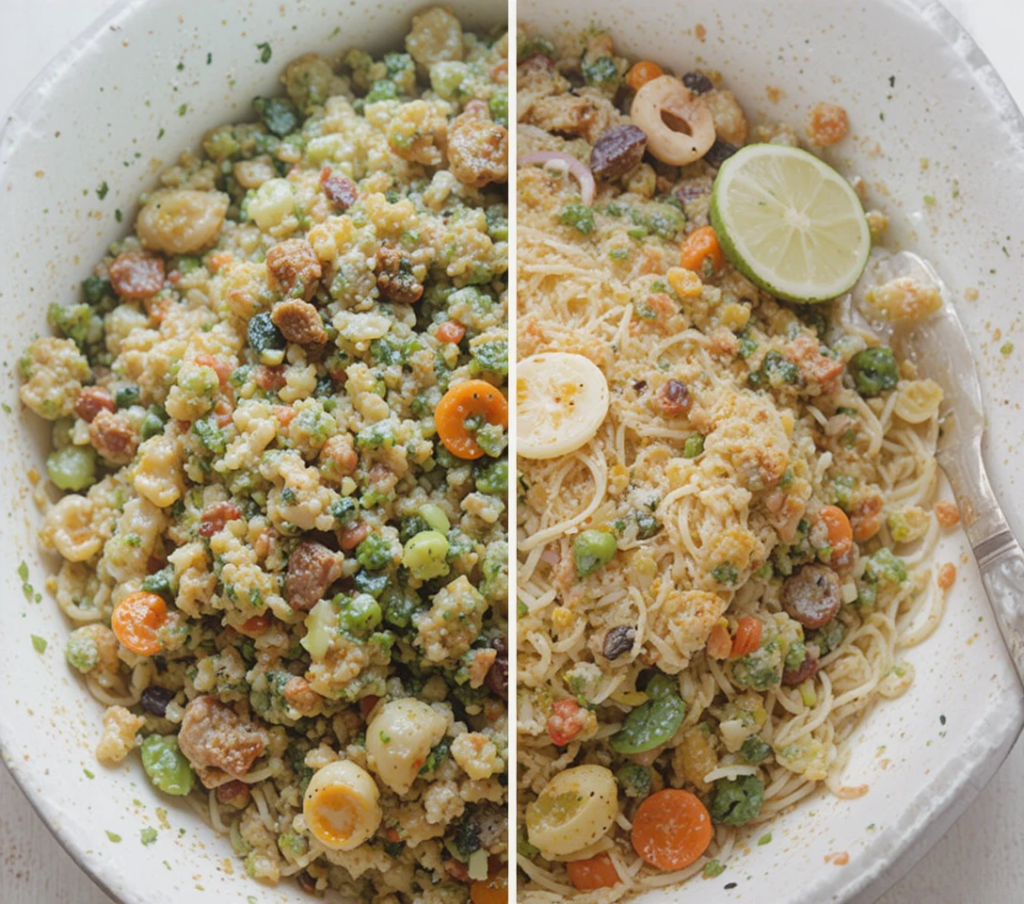
Result: Hash, salads, spreads
4. Separated to Combined Transformation
For: Individual components
Method: Mixing with binder
Result: Patties, fritters, casseroles
Professional Texture Tools:
-
Food processor (for quick transformations)
-
Box grater (for shredding)
-
Potato masher (for creating new textures)
-
Knife skills (different cuts create different experiences)
The Flavor Re-engineering Process
The 5 Flavor Enhancement Techniques
Leftovers often suffer from muted or tired flavors. These techniques bring them back to life:
1. Acid Revival
-
Citrus juice (lemon, lime)
-
Vinegars (balsamic, apple cider, rice)
-
Pickled vegetables
-
Yogurt or buttermilk
2. Umami Boost
-
Soy sauce or tamari
-
Fish sauce (few drops)
-
Tomato paste
-
Mushroom powder
-
Parmesan cheese
3. Freshness Injection
-
Chopped fresh herbs
-
Citrus zest
-
Green onions
-
Fresh chili peppers
-
Microgreens or sprouts
4. Fat Reintroduction
-
Olive oil drizzle
-
Butter finish
-
Toasted nuts or seeds
-
Avocado slices
-
Tahini or nut butters
5. Sweet Balance
-
Honey or maple syrup
-
Fruit additions
-
Caramelized onions
-
Sweet vegetables (corn, carrots)
The Flavor Layering Formula:
Existing Flavor + 2 Enhancements + Fresh Element = Transformed Dish
The Presentation Transformation
Plating Psychology
How you present transformed leftovers dramatically affects perception:
The Name Game:
-
Don’t call it “leftover chicken”
-
Call it “Deconstructed Chicken Salad” or “Chef’s Salad Creation”
-
Renaming changes expectations
Plate Selection:
-
Use different plates than original meal
-
Individual portions feel more intentional
-
White plates make colors pop
Garnish Strategy:
-
Always add one fresh element
-
Color contrast matters
-
Height variation creates visual interest
Serving Style:
-
Family-style for casual meals
-
Plated for special feel
-
Buffet for variety
The Leftover Transformation Matrix
Quick Reference Guide
| Leftover Type | Best Transformation | Key Technique | Time Required |
|---|---|---|---|
| Roasted Chicken | Chicken Salad | Shred, mix with fresh elements | 10 minutes |
| Cooked Rice | Fried Rice | High heat, constant stirring | 15 minutes |
| Pasta | Pasta Salad | Cold dressing, fresh vegetables | 10 minutes |
| Steamed Vegetables | Fritters | Mix with egg, flour, pan-fry | 15 minutes |
| Mashed Potatoes | Potato Cakes | Form patties, pan-fry | 12 minutes |
| Bread | Croutons/Bread Pudding | Cube, season, bake | 20 minutes |
| Soup | Pasta Sauce | Reduce, adjust consistency | 10 minutes |
| Cooked Beans | Bean Burgers | Mash, form patties, cook | 20 minutes |
Specialized Transformation Systems
The “Everything Leftover” Bowl Method
Formula:
Base (grains/lettuce) + Protein + Vegetables + Sauce + Crunch + Fresh = Perfect Bowl
Example from Random Leftovers:
-
Base: Cold rice
-
Protein: Shredded chicken
-
Vegetables: Roasted carrots and broccoli
-
Sauce: Thinned yogurt with herbs
-
Crunch: Toasted almonds
-
Fresh: Chopped cilantro
The Wrap and Roll System
Almost anything can go in a tortilla:
-
Protein + cheese + sauce = Quesadilla
-
Protein + vegetables + dressing = Wrap
-
Everything + eggs = Breakfast burrito
The Pizza Transformation
Day-old bread or tortillas become pizza bases:
-
Sauce (even thinned soup works)
-
Leftover protein
-
Vegetables
-
Cheese
-
Bake at 425°F until melted
Advanced Professional Techniques
The Deconstruction Method
Take a composite dish apart and rebuild differently:
Example: Leftover Chili
-
Deconstruct: Separate beans, meat, sauce
-
Rebuild Option 1: Chili stuffed peppers
-
Rebuild Option 2: Chili cheese fries
-
Rebuild Option 3: Chili omelet filling
The International Transformation
Change cuisine styles:
Italian to Mexican:
Pasta → Tortilla soup addition
Marinara → Enchilada sauce base
American to Asian:
Roast chicken → Chicken fried rice
Mashed potatoes → Potato curry
The Freezer Rescue Method
For forgotten freezer items:
Protocol:
-
Thaw safely (refrigerator, not counter)
-
Assess quality
-
Transform into soups, sauces, or casseroles
-
Add fresh elements to revive
The Safety Transformation Rules
Non-Negotiable Guidelines
Time Windows:
-
3-4 days for most cooked leftovers
-
1-2 days for fish and seafood
-
7 days for properly stored soups/stews
Temperature Control:
-
Reheat to 165°F internal temperature
-
Don’t reheat more than once
-
Cool properly before storing
Visual and Sensory Checks:
-
When in doubt, throw it out
-
Off smells = discard
-
Mold = discard entire container
-
Slimy texture = discard
The Economic Impact System
Tracking Your Transformation Success
Simple Tracking Method:
-
Note what you would have thrown away
-
Record what you created instead
-
Calculate value saved
Example Calculation:
-
Would have wasted: 2 chicken breasts, rice, vegetables = $8 value
-
Transformed into: Chicken fried rice for 4 = $12 meal value
-
Net gain: $20 value created from “waste”
Annual Impact:
-
Average household saves $1,500 annually
-
Reduces grocery bills by 20-30%
-
Decreases takeout spending
The Weekly Transformation Schedule
Practical Implementation Plan
Monday: Assessment Day
-
Review weekend leftovers
-
Plan week’s transformations
-
Do simple revivals
Tuesday: Quick Transform Day
-
15-minute transformations
-
Focus on single-item makeovers
-
Simple flavor enhancements
Wednesday: International Day
-
Change cuisine styles
-
Experiment with flavors
-
Family favorite: Taco/burrito night from leftovers
Thursday: Bowl/Casserole Day
-
Combine multiple leftovers
-
Create one-dish meals
-
Perfect for using bits and pieces
Friday: Pizza/Wrap Day
-
Fun, easy transformations
-
Kids can participate
-
Clean out small amounts
Saturday: Creative Challenge
-
Most creative transformation
-
Try new techniques
-
Document successes
Sunday: Planning and Prep
-
Assess what remains
-
Plan final transformations
-
Prepare for new week
The Mindset Transformation
Changing Your Relationship with Leftovers
“This is old food”
To: “These are pre-prepared ingredients”
“I’m eating leftovers”
To: “I’m enjoying a creatively transformed meal”
Waste management
To: Resource optimization
Professional Perspective:
“The most creative cooking happens within constraints. Leftovers provide the perfect creative constraint framework.”
Getting Started: Your First Transformation
Beginner-Friendly Project
Choose: One simple leftover (cooked chicken, rice, or vegetables)
Apply: One enhancement technique (add acid, fresh herbs, or crunch)
Present: On different plate with garnish
Evaluate: Taste difference, note satisfaction
Common Transformation Questions
Q: How many times can I transform the same food?
A: Ideally once after original preparation. Each transformation should be the final serving.
Q: Can I mix different leftover days?
A: Yes, but all should be within safe time windows. Don’t mix 4-day-old with 1-day-old.
Q: What if my family recognizes it’s leftovers?
A: Presentation and renaming work wonders. Serve differently than original.
Q: How do I deal with small amounts of many things?
A: Combine into bowls, frittatas, or soups. Small amounts add complexity.
Conclusion: The Transformation Journey
Leftover food transformation isn’t about making do with less—it’s about creating more from what you already have. It’s a skill that saves money, reduces waste, develops culinary creativity, and turns routine meals into exciting culinary adventures
The journey of leftover food transformation is not merely a series of kitchen techniques—it is a fundamental shift in consciousness, a new way of seeing, thinking, and creating. What begins as a practical solution to reduce waste evolves into a profound practice of culinary mindfulness, creative resourcefulness, and environmental stewardship.