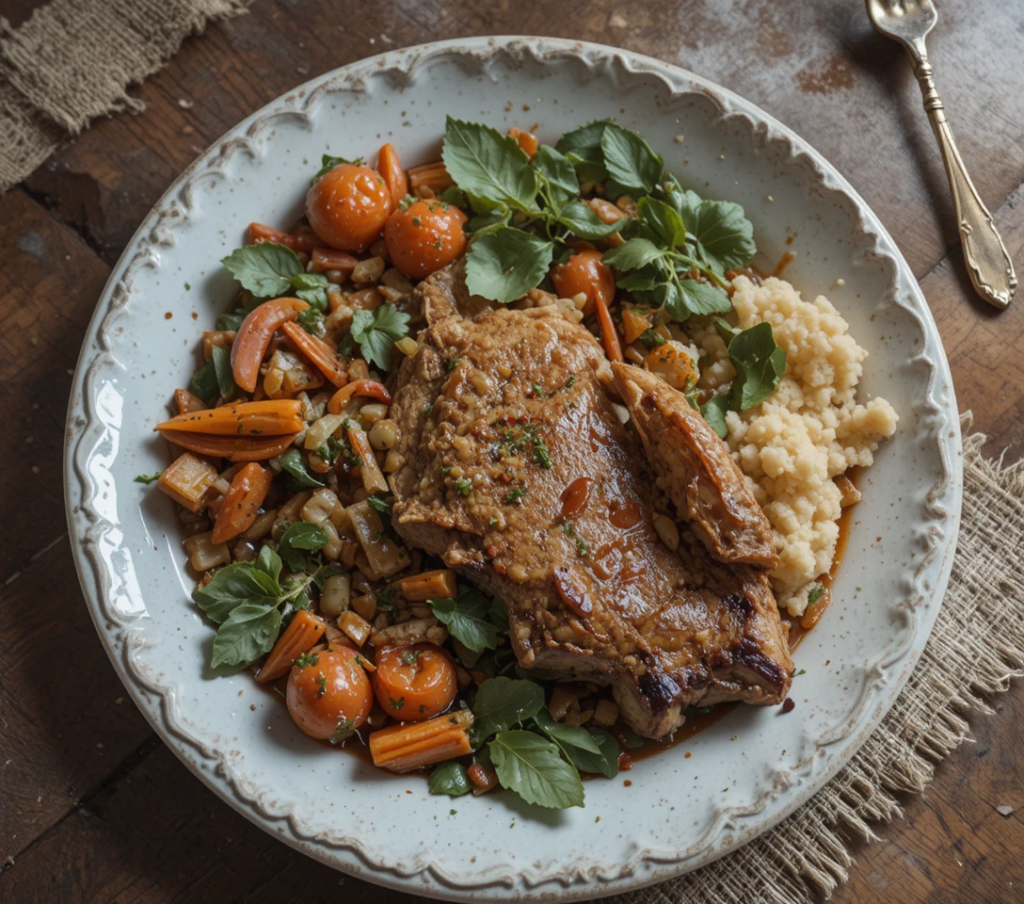
Open any American refrigerator and you’re not looking at leftovers—you’re looking at culinary stratigraphy, layers of edible history waiting to be excavated. The takeout container from three nights ago? That’s Layer C-3: The Thai Food Horizon. The foil-wrapped parcel behind the milk? Layer M-7: Mystery Meat Formation. The half-empty jar of salsa? Artifact J-12: Condiment Culture, circa Last Tuesday.
This is the archaeology of leftovers—a methodology that transforms kitchen cleanup into an excavation, meal planning into a reconstruction, and food waste into a historical puzzle to be solved. In American households, where 30-40% of food becomes waste, this isn’t just creative cooking; it’s culinary rescue archaeology, saving edible artifacts before they’re lost to the landfill forever. Synesthesia Cooking
Establishing the Dig Site
Your Refrigerator as Archaeological Grid
Professional archaeologists work within carefully measured grids. Your refrigerator needs the same system.
The Vertical Timeline:
-
Top Shelf: Recent layers (0-48 hours)
-
Middle Shelves: Established layers (2-5 days)
-
Bottom Shelf: Ancient civilizations (5+ days)
-
Crisper Drawers: Preserved specimens
-
Door: Cultural artifacts (condiments, sauces)
The Horizontal Stratigraphy:
-
Left Side: Protein civilizations
-
Center: Grain kingdoms
-
Right Side: Vegetable cultures
-
Back Wall: Lost civilizations (approach with caution)
Site Labeling System:
-
Date of origin
-
Cultural origin (recipe/cuisine)
-
Primary components
-
Excavation priority status
Excavation Tools and Techniques
The Kitchen Archaeologist’s Toolkit
Essential Excavation Equipment:
-
Trowels and Brushes: Small spoons and soft brushes for gentle handling
-
Screens: Colanders and strainers for separating components
-
Sample Bags: Small containers for individual artifact analysis
-
Field Notes: Kitchen notebook for documentation
-
Photographic Record: Phone camera for visual documentation
Safety Equipment:
-
Disposable gloves for questionable specimens
-
Mask for pungent discoveries
-
Thermometer for temperature verification
-
pH strips for fermentation assessment
Analytical Tools:
-
Magnifying glass (or phone macro mode) for mold inspection
-
Taste-test spoons (disposable)
-
Aroma analysis protocol
-
Texture assessment scale
The Excavation Protocol
Systematic Approach to Leftover Recovery
Surface Survey
-
Visual inspection without disturbance
-
Aroma mapping
-
Container archaeology (What does the packaging tell us?)
-
Preliminary dating based on memory and labels
Test Pitting
-
Small exploratory samples
-
Safety and quality assessment
-
Flavor profile documentation
-
Transformation potential evaluation
Full Excavation
-
Complete container emptying
-
Component separation
-
Individual analysis
-
Reconstruction planning
Laboratory Analysis
-
Flavor profiling
-
Texture assessment
-
Nutritional evaluation
-
Cultural context consideration
Artifact Classification System
Categorizing Your Findings
Complete Artifacts
-
Whole meals in recognizable form
-
Example: Last night’s lasagna
-
Excavation Strategy: Preservation and careful reuse
Partial Artifacts
-
Components without context
-
Example: Roasted vegetables without main
-
Excavation Strategy: Creative reassignment
Fragmentary Evidence
-
Small amounts of multiple things
-
Example: Quarter-cup of four different sides
-
Excavation Strategy: Composite creation
Cultural Artifacts
-
Ethnic or holiday-specific items
-
Example: Thanksgiving leftovers in July
-
Excavation Strategy: Cultural reinterpretation
Mystery Objects
-
Unidentifiable specimens
-
Example: The unlabeled frozen block
-
Excavation Strategy: Scientific investigation
Dating Methods
Determining Leftover Chronology
Relative Dating Methods:
-
Stratigraphic Position: Lower in fridge = older
-
Container Typology: Takeout containers vs. glassware
-
Cross-Dating: Association with datable events (“This must be from the party”)
-
Seriation: Sequential changes in similar items
Absolute Dating Methods:
-
Label Inscription: Dates written on containers
-
Memory Association: “I made this on Tuesday”
-
Biological Clock: Mold growth stages
-
Fermentation Progression: Sauerkraut bubble counting
The Carbon-14 Equivalent:
-
Smell intensity correlation
-
Color change progression
-
Texture transformation timeline
-
Condensation pattern analysis
Reconstruction Techniques
From Artifacts to Meals
Analogous Reconstruction
Using similar cultures to fill in gaps
Example: Using Italian techniques to reconstruct partial pasta dishes
Experimental Archaeology
Trying historical cooking methods
Example: Using ancient preservation techniques on modern leftovers
Contextual Reconstruction
Considering original meal context
Example: Recreating the full experience of a holiday meal from fragments
Creative Interpretation
Imagining new uses for artifacts
Example: Turning roasted vegetables into savory bread pudding
Specialized Excavations
Challenging Dig Sites
The Condiment Layer Excavation:
-
Multiple partial bottles and jars
-
Dried rims and crystallized contents
-
Excavation Technique: The Unified Sauce Theory (combining compatible remnants)
The Freezer Permafrost Dig:
-
Frost-covered mysteries
-
Unidentifiable shapes
-
Excavation Technique: Slow thaw analysis with frequent assessment
The Back-of-Fridge Lost Civilization:
-
Forgotten containers
-
Historical layers compressed
-
Excavation Technique: Careful layer-by-layer removal
The Holiday Horizon:
-
Mass burial sites of feast remains
-
Emotional significance complicating analysis
-
Excavation Technique: Ritual respect combined with practical transformation
The Laboratory Kitchen
Analysis and Transformation Space
The Clean Room
-
Contamination-free preparation
-
Sample organization
-
Initial documentation
-
Function: Preventing cross-contamination of flavors
The Analysis Station
-
Tasting area
-
Texture testing
-
Aroma evaluation
-
Function: Scientific assessment of artifact quality
The Reconstruction Workshop
-
Ingredient preparation
-
Cooking experimentation
-
Technique application
-
Function: Transforming findings into meals
The Documentation Center
-
Recipe recording
-
Photographic evidence
-
Success/failure analysis
-
Function: Building institutional knowledge
Publication and Dissemination
Sharing Your Findings
The Field Report (Family Dinner):
-
Presenting reconstructed meals
-
Explaining archaeological process
-
Gathering feedback
-
Format: Plated presentation with oral explanation
The Academic Paper (Recipe Documentation):
-
Detailed methodology
-
Results analysis
-
Conclusions and recommendations
-
Format: Written recipe with notes
The Popular Publication (Social Media):
-
Engaging narrative
-
Photographic evidence
-
Accessible explanations
-
Format: Instagram posts with stories
The Conference Presentation (Potluck):
-
Multiple reconstructed dishes
-
Comparative analysis
-
Community discussion
-
Format: Shared meal with conversation
Ethical Archaeology
Responsible Leftover Excavation
Do No Harm
-
Safety first in all excavations
-
When in doubt, throw it out
-
Respect for biological realities
Contextual Respect
-
Honor the original meal’s intent
-
Consider cultural significance
-
Acknowledge emotional connections
Sustainable Practice
-
Minimize new waste in reconstruction
-
Consider environmental impact
-
Support circular food systems
Educational Value
-
Teach others your methods
-
Share knowledge freely
-
Build community expertise
Advanced Methodologies
For the Professional Kitchen Archaeologist
Stable Isotope Analysis:
Tracing ingredient origins through flavor profiles
Application: Identifying previously used herbs and spices
DNA Sequencing Equivalent:
Identifying component relationships through taste and texture
Application: Determining original recipes from fragments
Pollen Analysis Method:
Detecting subtle herb and spice remnants
Application: Recreating seasoning blends
Dendrochronology Analog:
Using sequential meals to build timelines
Application: Understanding weekly cooking patterns
The Economic of Excavation
Financial Archaeology
Artifact Valuation:
-
Original cost calculation
-
Labor investment consideration
-
Transformation potential assessment
-
Sentimental value acknowledgment
Excavation ROI:
(Value of reconstructed meals) - (Excavation time + Additional ingredients) = Archaeological profit
Budget Archaeology:
-
Maximizing food budget through excavation
-
Reducing waste disposal costs
-
Lowering grocery expenditures
-
Typical household savings: $1,500-2,500 annually
Creating a Research Institute
Building Your Home Archaeology Program
The 30-Day Field Season:
Survey and Mapping
-
Complete refrigerator inventory
-
Establish dating system
-
Create excavation priority list
-
Set up documentation system
Initial Excavations
-
Tackle highest priority sites
-
Practice documentation
-
Develop personal methodologies
-
Establish safety protocols
Advanced Techniques
-
Try reconstruction methods
-
Experiment with combinations
-
Invite collaborator input
-
Refine processes
Publication and Planning
-
Share findings with household
-
Plan ongoing excavations
-
Establish regular field seasons
-
Mentor new archaeologists (family members)
Part 14: Notable Discoveries
Case Studies in Leftover Archaeology
The Titanic of Turkeys: Thanksgiving 2018
-
Artifacts: 14 lbs turkey, 8 side dishes, 3 pies
-
Excavation Challenge: Emotional significance, massive quantity
-
Reconstruction Success: 7 distinct meals over 5 days
-
Key Finding: Cranberry sauce makes excellent barbecue glaze
The Pompeii of Pasta: Forgotten Freezer 2020
-
Artifacts: Multiple frozen pasta portions
-
Excavation Challenge: Freezer burn, lost identities
-
Reconstruction Success: Pasta bake with enhanced sauce
-
Key Finding: Frozen pasta revives beautifully in sauce
The Tomb of the Unknown Lunch: Office Fridge Cleanout
-
Artifacts: Multiple unclaimed containers
-
Excavation Challenge: Unknown origins, safety concerns
-
Reconstruction Success: Community “mystery soup” lunch
-
Key Finding: Group archaeology builds community
Conclusion: The Never-Ending Dig
The archaeology of leftovers transforms a mundane kitchen task into a scientific endeavor, a creative pursuit, and an environmental mission. It teaches us to see not waste, but history. Not disposal, but discovery. Not an ending, but a continuation.