Mastery Food Transformation
The Life-Changing Power of Food Transformation
Every year, the average American family throws away approximately 1,160 pounds of food, translating to nearly $1,500 in wasted groceries. Yet within this staggering statistic lies an extraordinary opportunity—the art of leftover food transformation. This comprehensive guide will transform you from someone who merely reheats leftovers into a culinary artist who creates new, exciting meals from existing ingredients.
Food transformation isn’t about eating the same meal twice. It’s about culinary reinvention, where yesterday’s roasted chicken becomes today’s gourmet chicken salad, last night’s vegetables transform into tomorrow’s flavorful soup, and stale bread emerges as a delicious bread pudding. This practice represents the intersection of sustainability, economy, and creativity—a skill that saves money, reduces environmental impact, and develops your culinary expertise.
Understanding the Science of Leftovers
Why Some Foods Transform Better Than Others
Before diving into techniques, understanding the science behind food transformation is crucial. Different foods undergo specific chemical and physical changes that make them ideal (or challenging) for reinvention.
The Starch Retrogradation Phenomenon:
-
What it is: When cooked starches cool, their molecules reorganize into crystalline structures
-
Why it matters: This makes day-old rice PERFECT for fried rice and stale bread IDEAL for bread pudding
-
Practical application: Plan your rice cooking a day ahead for optimal fried rice results
Protein Denaturation and Reformation:
-
The process: Heating proteins changes their structure, and cooling allows for new formations
-
Transformation advantage: Shredded, reformed proteins absorb flavors better
-
Example: Yesterday’s roast chicken makes superior chicken salad compared to freshly cooked chicken
Flavor Concentration Over Time:
-
The science: Moisture evaporation intensifies remaining flavors
-
Benefit: Day-old soups and stews often taste richer and more developed
-
Professional tip: Cook soups a day before serving for optimal flavor
Essential Safety Protocols for Leftover Transformation
Non-Negotiable Food Safety Rules
Transformation begins with safety. These guidelines protect your health while maximizing food quality.
The 2-Hour/4-Hour Rules:
-
Refrigerate leftovers within 2 hours of cooking
-
Discard food left at room temperature for over 4 hours
-
Exception: Very hot environments (above 90°F) reduce this to 1 hour
Proper Storage Hierarchy:
-
Cool rapidly: Divide large portions into smaller containers
-
Shallow containers: No more than 2 inches deep for quick cooling
-
Airtight sealing: Prevents contamination and moisture loss
-
Front-of-fridge placement: Ensures you see and use items promptly
Transformation Timelines by Food Type:
-
Cooked meats: 3-4 days
-
Soups and stews: 3-4 days
-
Cooked vegetables: 3-5 days
-
Rice and pasta: 3-5 days (with careful reheating)
-
Pizza: 3-4 days
Reheating Protocols:
-
Always reheat to 165°F internal temperature
-
Use a food thermometer for accuracy
-
Only reheat the amount you’ll consume immediately
-
Bring soups and sauces to a full boil when reheating
The Professional Transformation Toolkit
Essential Equipment for Masterful Transformations
You don’t need a professional kitchen, but these tools elevate your transformation game:
Must-Have Equipment:
-
Quality storage containers in multiple sizes (glass preferred)
-
Food thermometer for safety verification
-
Sharp chef’s knife for precise cutting
-
Non-stick skillet for even heating
-
Blender or food processor for texture modification
Advanced Helpers (Optional but Valuable):
-
Air fryer: Excellent for re-crisping
-
Immersion blender: Perfect for soups and sauces
-
Vacuum sealer: Extends freezer life dramatically
-
Mandoline slicer: Creates uniform cuts for even cooking
Category-Specific Transformation Techniques
Proteins: The Second-Act Specialists
Chicken and Turkey Transformations:
-
Shredded Applications:
-
Chicken salad with Greek yogurt, celery, and grapes
-
BBQ chicken sandwiches
-
Chicken enchiladas or tacos
-
-
Soup and Stew Integration:
-
Chicken noodle soup
-
Creamy chicken and wild rice soup
-
Chicken tortilla soup
-
-
Casserole Creations:
-
Chicken pot pie
-
Chicken and broccoli casserole
-
King Ranch chicken casserole
-
Beef and Pork Reinventions:
-
Shepherd’s pie with ground beef
-
Beef stroganoff from roast beef
-
Pulled pork sandwiches from pork roast
-
Beef and barley soup from steak pieces
Grains and Starches: The Texture Masters
Rice Transformation Formulas:
-
Fried rice: Day-old rice + vegetables + protein + soy sauce
-
Rice pudding: Cooked rice + milk + sugar + cinnamon
-
Stuffed peppers: Rice + protein + vegetables + tomato sauce
-
Rice salads: Cold rice + vinaigrette + fresh vegetables
Pasta Reinventions:
-
Pasta frittata: Leftover pasta + eggs + cheese
-
Pasta salad: Cold pasta + Italian dressing + vegetables
-
Baked pasta casserole: Pasta + additional sauce + cheese
-
Minestrone soup: Pasta + broth + vegetables
Vegetables: The Flavor Concentrators
Leafy Green Revivals:
-
Smoothie base: Spinach or kale + fruit + yogurt
-
Soup addition: Stir into hot soups just before serving
-
Pesto: Blend with nuts, oil, and Parmesan
-
Frittata filling: Mix with eggs and cheese
Roasted Vegetable Transformations:
-
Vegetable soup: Blend with broth
-
Pasta sauce: Puree with tomatoes
-
Sandwich spread: Mash with mayonnaise
-
Pizza topping: Distribute over pizza base
Advanced Professional Techniques
The Flavor Layering Method
Professional chefs don’t just add seasonings—they build flavors in layers:
Foundation Flavors
-
Start with aromatics (onions, garlic, ginger)
-
Build with umami elements (tomato paste, mushrooms)
-
Add depth with spices
Acidity Balance
-
Citrus juice (lemon, lime)
-
Vinegars (balsamic, apple cider, rice wine)
-
Wine or sherry
Freshness Finish
-
Fresh herbs (added at the end)
-
Citrus zest
-
Green onions or chives
Texture Modification Systems
Creating Multiple Textures in One Dish:
-
Crispy elements: Toasted nuts, fried onions, croutons
-
Creamy components: Avocado, yogurt, pureed vegetables
-
Chewy ingredients: Dried fruits, certain grains
-
Crunchy additions: Fresh vegetables, seeds, crispy proteins
The International Transformation Method
Change the cuisine style to create completely new experiences:
Italian to Mexican Transformation:
-
Pasta → Tortilla soup addition
-
Marinara sauce → Enchilada sauce base
-
Meatballs → Taco filling
American to Asian Reinvention:
-
Roast chicken → Chicken fried rice
-
Mashed potatoes → Potato curry
-
Steak → Beef and broccoli stir-fry
The Weekly Transformation System
A Practical 7-Day Implementation Plan
Sunday: Foundation Day
-
Cook proteins, grains, and roasted vegetables
-
Prepare basic sauces
-
Portion and store strategically
Monday: Simple Transformations
-
Grain bowls with different sauces
-
Salad variations
-
Simple reheating with fresh additions
Tuesday: International Night
-
Change cuisine styles
-
Experiment with global flavors
-
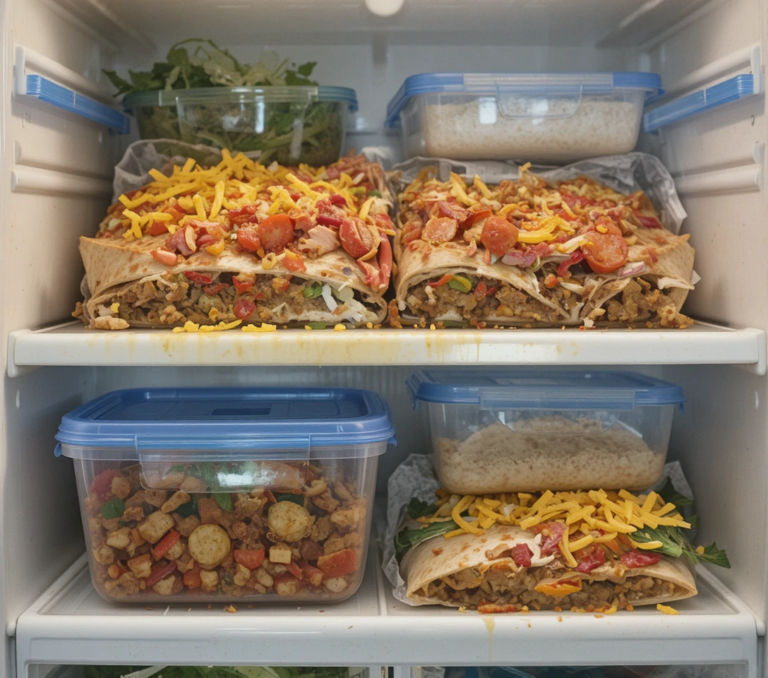
Family favorite: Taco/burrito bar from leftovers
Wednesday: Soup and Stew Focus
-
Transform multiple leftovers into soup
-
Freeze extra portions
-
Serve with bread or salad
Thursday: Casserole Creation
-
Combine various leftovers
-
Add binding elements (eggs, cheese, sauce)
-
Bake for easy, comforting meal
Friday: Pizza/Wrap Night
-
Use tortillas or bread as base
-
Everyone customizes their creation
-
Clean out small amounts creatively
Saturday: Creative Challenge
-
Most innovative transformation
-
Try new techniques
-
Document successful creations
Freezer Mastery for Long-Term Transformation
Professional Freezing Techniques
Optimal Freezing Methods by Food Type:
-
Soups and stews: Freeze in portion-sized containers
-
Sauces: Ice cube trays for small amounts
-
Proteins: Vacuum seal or wrap tightly in foil
-
Breads: Slice before freezing for easy access
Freezer Organization System:
-
Label everything: Contents and date
-
First in, first out rotation
-
Inventory list on freezer door
-
Regular monthly clean-out
Best Foods for Freezing:
-
Cooked grains (rice, quinoa)
-
Soups and stews
-
Cooked beans
-
Tomato-based sauces
-
Most baked goods
Foods That Don’t Freeze Well:
-
Raw vegetables with high water content
-
Cream-based soups (may separate)
-
Cooked pasta (can become mushy)
-
Fried foods (lose crispness)
The Economic Impact of Food Transformation
Real Savings Calculations
Monthly Savings Breakdown:
-
Reduced grocery bills: $125-200
-
Less eating out: $75-150
-
Lower food waste disposal: $20-40
-
Total monthly savings: $220-390
Annual Impact:
-
Direct savings: $2,640-4,680
-
Waste reduction: 800-1,200 pounds
-
Environmental benefit: Equivalent to planting 15-20 trees
Return on Investment Calculation:
(Savings from reduced waste + Value of created meals) - (Time investment + Additional ingredients) = Positive ROI
Example: Transforming $10 of leftovers into $25 worth of meals with $2 additional ingredients and 30 minutes of time yields $13 net gain.
Environmental Benefits and Sustainability
Your Personal Environmental Impact
Carbon Footprint Reduction:
-
Each pound of food wasted contributes to 3.5 pounds of CO2 emissions
-
Reducing waste by 25% = Taking one car off the road for two weeks annually
Water Conservation:
-
Food production accounts for 70% of global water use
-
Saving food saves the water used to produce it
-
Your efforts contribute to broader water conservation
Landfill Impact:
-
Food waste generates methane, a potent greenhouse gas
-
Reducing waste decreases landfill demand
-
Composting transformed food scraps completes the cycle
Getting Started – Your 30-Day Transformation Journey
Week-by-Week Implementation Guide
Awareness and Assessment
-
Track what you normally throw away
-
Identify your most common leftovers
-
Establish proper storage systems
-
Try one simple transformation
Skill Development
-
Master 3 basic transformation techniques
-
Practice proper reheating methods
-
Develop flavor balancing skills
-
Involve family members
System Implementation
-
Establish weekly transformation routines
-
Create a leftover transformation plan
-
Develop your personal recipe collection
-
Calculate your initial savings
Mastery and Innovation
-
Experiment with advanced techniques
-
Host a transformation-themed meal
-
Teach someone else your skills
-
Set long-term transformation goals
Common Transformation Challenges and Solutions
Problem-Solving Guide
“My family won’t eat leftovers”
-
Solution: Don’t call them leftovers. Present as “new creations”
-
Strategy: Change serving style and presentation
-
Example: Turn roast chicken into chicken salad sandwiches with different bread
“Food gets forgotten in the fridge”
-
Solution: Implement a “see-it” system with clear containers
-
Strategy: Designate specific shelves for transformation candidates
-
Tool: Use a whiteboard on the fridge to track items
“Transformations take too much time”
-
Solution: Focus on 15-minute transformations
-
Strategy: Batch process multiple items at once
-
Tip: Many transformations are faster than cooking from scratch
“Limited ingredients for transformation”
-
Solution: Keep transformation staples always available
-
Essentials: Eggs, tortillas, canned beans, rice, basic sauces
-
Strategy: Simple additions can completely change a dish
Conclusion: Your Transformation Legacy
Food transformation mastery represents more than a collection of kitchen skills—it’s a mindset shift that changes your relationship with food, resources, and creativity. It turns what was once considered a chore (dealing with leftovers) into an opportunity for culinary expression, economic savings, and environmental stewardship.
The journey from someone who throws away food to someone who transforms it begins with a single decision: to see potential where others see waste. It grows with each successful transformation. It becomes second nature when you automatically think, “What could this become?” instead of “Should I throw this out?”
Your Transformation Journey Continues:
Today: Implement one technique from this guide
This Week: Transform three items you would have discarded
This Month: Calculate your savings and waste reduction
This Year: Become the transformation expert in your circle
Remember: Every great chef, every sustainable household, every budget-savvy cook understands this fundamental truth—the most valuable ingredients aren’t always the ones you buy; sometimes, they’re the ones you save, transform, and elevate into something extraordinary.